
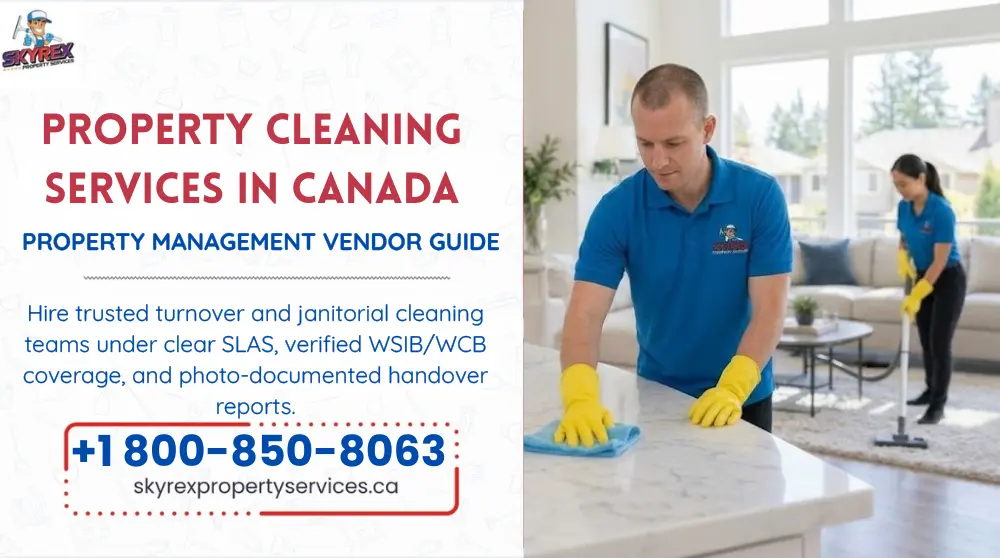
Hire a property cleaning company that works under a written scope and a service-level agreement (SLA). Ask for proof of insurance too. These steps help you turn units faster, cut re-cleans, and limit risk.
Property cleaning services for property managers cover unit turnovers, common areas, vacant units, and post-construction cleanups. A strong vendor shows up on time and follows a checklist. It also sends photos as proof. A weak vendor causes late move-ins, repeat visits, and tenant complaints.
Rules also change across Canada. Ontario managers often ask vendors for a WSIB clearance certificate. In Alberta, managers check WCB coverage. British Columbia uses WorkSafeBC.
At SKYREX Property Services, we clean rental and commercial properties. This guide lists what every property manager should demand from a cleaning vendor, including us.
Table Of Contents
What Are Property Cleaning Services for Property Managers?

Property cleaning services help keep rental and commercial properties clean, safe, and ready for use. They include unit turnovers, common-area cleaning, vacant-unit cleaning, and post-construction cleanup.
Property managers hire cleaning vendors to follow an agreed scope, schedule, and service-level agreement (SLA). This helps teams prepare units for new tenants and maintain shared spaces.
Property Cleaning vs Janitorial vs Housekeeping vs Maid Service
Each service meets different needs. Property cleaning prepares units between tenants. Janitorial service maintains shared spaces through regular janitorial cleaning services. Housekeeping serves hotels and short-term rentals. For properties with frequent guest changeovers, Airbnb and rental cleaning may be a closer fit. Maid services focus on occupied homes.
| Service | Best for | Typical tasks | Schedule |
| Property cleaning | Rental turnovers and vacant units | Deep cleaning, move-in preparation | Per unit or as needed |
| Janitorial | Offices, lobbies, and hallways | Floors, washrooms, waste removal | Daily or weekly |
| Housekeeping | Hotels and short-term rentals | Beds, linens, bathrooms, restocking | Per stay |
| Maid service | Occupied homes | Dusting, vacuuming, kitchen and bathroom cleaning | Weekly or monthly |
Many property managers need both turnover cleaning and janitorial service. Combining them under one SLA can simplify scheduling, communication, and reporting.
Types of Property Cleaning Services in Property Management
Property management teams buy five main types of cleaning. Each one solves a different problem. Some run daily. Others happen when a unit changes hands. Most property management cleaning services come under one contract, so you can mix and match.
Unit Turnover & Move-Out Cleaning
Unit turnover cleaning gets a rental ready for the next tenant. The crew cleans kitchens, bathrooms, floors, appliances, and closets. Speed matters because some turnovers must finish within 24 hours. Empty units earn no rent. Ask for same-day or next-day slots, and request a photo report at handoff. Some vendors call this move-in and move-out cleaning, which prepares rental units for incoming tenants.
Common-Area & Janitorial Cleaning
Common-area cleaning keeps shared spaces tidy. It covers lobbies, hallways, stairwells, elevators, and washrooms. For buildings that need scheduled upkeep, commercial building cleaning can cover these shared spaces on a recurring basis. Crews follow a daily or weekly schedule. They empty trash, mop floors, and wipe door handles and elevator buttons. Visitors judge a building by its entrance, so this work protects your reputation.
Vacant-Unit & Pre-Listing Cleaning
Vacant units collect dust fast. A pre-listing clean makes a unit show-ready. The crew clears debris, washes windows, and freshens kitchens and bathrooms. Property teams preparing a home for sale or lease can also review real estate cleaning services. Clean units photograph better and often rent faster. Book this clean before photos and tours.
Post Construction & Renovation Cleaning
Renovations leave fine dust on every surface. This service removes drywall dust, paint splatter, and sticker residue. Crews do a rough clean first. They return for a final clean after the trades leave. See the post-renovation section above when planning the handover. Ask how the vendor protects new floors. Contractor rules can be stricter on renovation sites, so see the vetting section below.
Specialty Add-Ons: Carpet, Windows, Pressure Washing, Disinfection
Add-ons extend your base scope. Deep carpet cleaning and tile and floor cleaning help restore worn floors. Window cleaning brightens lobbies. Pressure washing clears walkways and entrances. For shared spaces during flu season, disinfection services may also be worth considering. Price these as add-ons, so you pay only when you need them. For budgeting, compare the scope with this guide to window cleaning costs in Canada.
Need a turnover crew? SKYREX Property Services cleans rental units, common areas, and vacant properties. Request a turnover quote today.
Why Property Managers Outsource Professional Cleaning
Property managers outsource cleaning to save time, reduce re-cleans, and prepare units faster. Professional cleaners follow clear checklists and help maintain consistent quality. This also reduces tenant complaints and the workload on your team.
Delays can mean lost rent and frustrated tenants. Month-end move-outs also create sudden demand for cleaning crews. A reliable vendor helps you manage these busy periods and keep properties ready for new tenants.
| Pain point | How a cleaning vendor helps |
| Slow turnovers | Faster scheduling and clear turnaround targets. |
| Uneven quality | Written checklists and quality checks. |
| Month-end rush | Extra cleaning capacity when needed. |
| Poor first impressions | Show-ready units for photos and viewings. |
| Liability and paperwork | Insurance and workers’ compensation documents. |
| Staffing gaps | Trained cleaners and backup crews. |
Outsourcing may not lower the hourly rate. The real value comes from fewer delays, less rework, and more reliable service. SKYREX Property Services builds cleaning plans around your property’s needs. The right approach depends on whether you manage condos, commercial buildings, or student housing.
What Changes by Portfolio: MURB, Condo, Commercial, Student, Short-Term Rental
Cleaning needs change with building type. A plan that works for an apartment tower can fail in an office plaza. Match the scope, schedule, and crew size to your portfolio. Here is how each type differs.
Multi-unit residential (MURB). Turnovers drive the workload. Expect steady unit cleans plus daily common-area care. Ask your vendor to turn several units in one week without delays.
Condo and strata corporations. Condominium corporations in Ontario and strata corporations in British Columbia answer to boards and owners. Boards want proof. Pick a vendor that sends service reports and current insurance papers.
Commercial and mixed-use buildings. Offices, plazas, and retail strips need after-hours cleaning. Office cleaning services can cover work areas, while washrooms and entrances take the most wear. Mixed-use buildings need two scopes: one for tenants upstairs and one for shops below.
Student housing. In university towns like Kingston, Ontario, student turnover season is one of the busiest, most demanding stretches in property management. Many units flip at once. Book your crew months ahead.
Short-term rentals. Guests check out and new guests check in on the same day. The crew restocks linens and supplies, and it reports damage. Documented checklists create a condition record you can use for insurance and disputes.
Whatever your portfolio, turnover work sits at the core. The next section gives you a checklist to hand to any vendor.
Turnover Cleaning Checklist Property Managers Can Hand to a Vendor
A written checklist ends guesswork. It tells the crew what “clean” means in your building. It also gives you a standard to inspect against. Use the lists below as your starting scope, then adjust them for your units.
Standard vs Deep Turnover Clean
A standard turnover clean resets a unit that was kept in good shape. A deep turnover clean adds heavy-duty work for units left dirty or occupied a long time. For a broader task list, see this deep house cleaning guide. Vendors often offer both levels, plus add-ons like fridge, oven, baseboards, and windows. Inspect the unit first, then pick the level.
| Area | Standard turnover | Deep turnover |
| Floors | Vacuum and mop | Steam or scrub, plus edges and corners |
| Kitchen | Wipe counters, cabinets, sink | Degrease inside cabinets, stove, and range hood |
| Appliances | Wipe outside surfaces | Clean inside the fridge and oven |
| Bathrooms | Clean toilet, tub, sink, mirror | Remove soap scum and descale fixtures |
| Walls and trim | Spot-wipe marks | Wash walls and scrub baseboards |
| Windows | Clean glass and sills | Add tracks and screens |
Room-by-Room Rental Unit Cleaning Checklist
Hand this list to every vendor. Ask them to sign off on each room. You can also compare it with this move-out cleaning checklist when setting your handover standard.
Kitchen
- Clean counters, sink, and backsplash
- Wipe cabinet fronts, inside and out
- Clean the stove, oven, and range hood
- Clean the fridge and freezer, then leave them empty and dry
Bathrooms
- Scrub the toilet, tub, shower, and sink
- Clean mirrors and light fixtures
- Wipe vents and wash the floor
Bedrooms, living areas, and closets
- Dust blinds, vents, and ceiling fans
- Wipe light switches, outlets, and door handles
- Clean closet shelves and rods
- Vacuum carpets and mop hard floors
Entry, balcony, and extras
- Sweep the balcony and wipe the railing
- Remove trash, debris, and leftover items
- Check that all lights work and report any damage
Photo Documentation & Handover Report
Photos prove the unit’s condition. Ask your vendor to take before and after photos of each room. Each photo should carry a date and time. The crew should also note damage, stains, and missing items. Documented checklists create a record of property condition that helps with insurance and disputes. Store the report with the unit file. Rules on move-out cleaning and deposits vary by province, so check your local tenancy board before you rely on photos in a dispute.
How Much Do Property Cleaning Services Cost in Canada?
Property cleaning costs depend on unit size, unit condition, and the pricing model. Prices also vary by city and by scope. No single rate fits every building. Ask each vendor for a written quote that lists what it covers. Then compare quotes line by line, not by the bottom number.
Pricing Models: Per Unit, Hourly, Per Square Foot, Monthly Contract
Vendors use four main pricing models. Each one suits a different job.
| Model | How it works | Best for | Watch out for |
| Flat rate per unit | One price per turnover, often by unit size | Apartment turnovers | Extra fees for dirty units |
| Hourly rate | You pay for crew time | Odd jobs, small or unclear scopes | Slow crews raise your bill |
| Per square foot | Rate times unit or floor area | Large vacant spaces, post-construction | Rates differ for heavy soil |
| Monthly contract | Fixed fee for set visits | Common areas and janitorial | Scope gaps and auto-renewals |
Per-unit pricing works well for rental turnovers, while monthly contracts suit regular common-area cleaning. Hourly and square-foot pricing can work better for special or larger jobs. SKYREX Property Services provides custom quotes based on property size, condition, scope, and service frequency.
What Drives the Price
Several factors move a quote up or down. Know them before you request bids.
- Unit size: bigger units take more crew time.
- Condition: heavy grease, stains, or smoke residue add labour.
- Pets and smoking: odour and hair removal take extra steps.
- Appliances and add-ons: oven, fridge, window, and carpet cleaning cost extra.
- Access: long hauls, stairs, or no elevator slow the crew.
- Timing: rush, weekend, and after-hours jobs often carry surcharges.
Photograph a dirty unit before you book, and share the photos with the vendor. That step keeps the quote honest and avoids surprise charges.
Budget Formula: Cost per Turn × Annual Turnover Rate
Use this simple formula to plan your yearly cleaning budget.
Annual turnover cleaning budget = units × turnover rate × cost per turn
For example, take a 60-unit building with 25% yearly turnover. That means 60 × 0.25 = 15 turns per year. Multiply 15 by your quote per turn to get your annual cost. Add a buffer for deep cleans and add-ons.
Compare that number against vacancy loss. Each extra empty day costs you rent. A faster, reliable crew can pay for itself.
How to Choose a Property Cleaning Company
Check four things before you sign: insurance, workers’ compensation coverage, staff training, and site supervision. Ask for proof of each in writing. Strong vetting confirms WSIB clearance, liability coverage, WHMIS 2015 training records, and supervision ratios before price enters the talks. A cheap quote means little without these papers.
Insurance: CGL, Certificate of Insurance, Additional Insured
Ask every vendor for a certificate of insurance (COI). It should show commercial general liability (CGL) coverage. Check the policy dates and the coverage limit. Then ask the vendor to name you as an additional insured. That step protects you if a crew member damages a unit or a visitor gets hurt. Request a fresh COI each year.
WSIB, WCB, and WorkSafeBC Clearance by Province
A clearance certificate shows a contractor holds workers’ compensation coverage in good standing. It protects you from costs if a worker gets hurt on your property.
| Province | Board | What to request |
| Ontario | WSIB | Clearance certificate (eClearance) |
| Alberta | WCB-Alberta | Clearance letter |
| British Columbia | WorkSafeBC | Clearance letter |
| Quebec | CNESST | Proof of good standing |
Check the date on every certificate. In Ontario, eClearances are generally valid for about 90 days, so long contracts need repeat checks. For construction work, most provinces require proof of clearance before a contractor starts. That can apply to post-construction cleanups. Confirm the rules for your job with the board.
Training, Supervision, Key Control & Background Checks
Crew members should hold WHMIS 2015 training and know how to read safety data sheets (SDS). Ask who supervises the work. A named site supervisor and a set inspection schedule beat a distant account manager. Ask how the vendor tracks your keys and access codes. Finally, ask about police record checks. Tenants trust you with their homes, so you should know who enters them.
SKYREX Property Services shares insurance and clearance documents before the first job. Any vendor you hire should do the same.
Cleaning SLAs & Contracts: What to Put in Writing
A service-level agreement (SLA) defines the cleaning scope, schedule, quality standards, and what happens if service falls short. Put key terms in writing before work begins.
Track a few simple KPIs, such as:
| KPI | What to track |
| Turnaround time | Time from booking to completed cleaning |
| Inspection pass rate | Units passing the first inspection |
| Re-clean rate | Jobs needing additional cleaning |
| Response time | Time to answer requests |
| Report delivery | When completion reports are provided |
Also check for vague scopes, hidden fees, weak re-clean terms, unclear subcontractors, auto-renewals, and difficult exit terms. For larger portfolios, a master service agreement (MSA) can set common terms across multiple properties. SKYREX Property Services can work with your existing MSA or RFP requirements.
Canadian Seasonality: Winter Salt, Student Turnover, Quebec July 1

Canadian weather and move-in dates shape your cleaning calendar. Winter brings salt and slush. Spring and fall bring student move-outs. Property teams can use a spring pressure washing checklist when planning exterior maintenance. In Quebec, most leases turn over at once on July 1. Plan your seasonal cleaning schedule and vendor capacity around these peaks.
| Season | What happens | Cleaning action |
| Winter (Dec–Mar) | Boots track salt and slush into lobbies and hallways | Add mat service, mop more often, and plan a spring salt-residue clean |
| Spring (Apr–May) | Student leases end, and pressure washing season opens | Book turnover crews early, and wash walkways and entrances |
| Summer (Jun–Aug) | Quebec’s July 1 moving day lands, and many other leases end | Reserve extra crews weeks ahead for back-to-back units |
| Fall (Aug–Oct) | Students return, and leaf debris and rain hit entrances | Finish turnovers before move-in weekends, and sweep entrances |
Winter salt. Salt scratches floors and leaves white stains. Calcium chloride and other de-icing products can also damage flooring, so review this guide to calcium chloride floor damage. Daily mopping of entrances protects tile, vinyl, and hardwood. Ask your vendor to add visits during the worst weeks.
Student turnover. Student turnover season is one of the busiest and most demanding periods in property management, with tight timelines between residents. Lock in your cleaning dates before the rush starts.
Month-end moves. Outside the big peaks, many managers still see move-outs on the last day of the month and move-ins on the first. Ask your vendor about evening and weekend crews for those days.
Quebec’s July 1. Most Quebec leases end on June 30, so thousands of units flip in two days. Reserve your cleaning crew months ahead.
At SKYREX Property Services, we schedule extra crews before each peak. Share your lease-end dates early, and your vendor can staff for them.
In-House vs Outsourced vs Hybrid Cleaning
Most property managers pick one of three models. In-house teams give you control. Outsourced vendors give you flexibility. A hybrid model mixes both. The right choice depends on your building count, your turnover volume, and your budget for training and supervision.
| Factor | In-house team | Outsourced vendor | Hybrid |
| Control | Highest. You set every rule | Shared. The SLA sets the rules | Shared. You control daily work |
| Cost structure | Wages, benefits, supplies, equipment | Per unit, per visit, or monthly fee | Staff wages plus vendor fees |
| Peak-season capacity | Limited by headcount | Vendor adds crew | Vendor covers the peaks |
| Training and compliance | You manage WHMIS, WSIB, and insurance | Vendor manages them | Split between both |
| Best for | One large building with steady daily work | Multiple buildings or uneven turnover | Mid-size portfolios with daily and seasonal needs |
Small portfolios often start with outsourcing. You avoid hiring, training, and sick-day gaps. Large single sites may keep a daily janitor on staff. Then they hire a vendor for turnovers, deep cleans, and move-out spikes.
Compare costs honestly. Add wages, benefits, supplies, and equipment for the in-house option. Then compare that total against vendor quotes.
How SKYREX Works With Property Managers
SKYREX Property Services helps property managers keep rental units, vacant properties, and common areas clean and ready for tenants. We build each cleaning plan around your property, schedule, and specific needs.
Our process is simple. We learn your requirements, set a clear cleaning scope, and schedule service around your operations. Our trained, background-checked cleaners follow your property standards and help reduce your team’s workload.
With 7,000+ homes and businesses cleaned, SKYREX brings experience and an award-winning service reputation to every partnership.
We serve all over Canada, including Cambridge, Kitchener, Waterloo, Mississauga, Toronto, and Calgary.
Need a reliable cleaning partner? Contact SKYREX Property Services for a custom quote. Tell us about your properties, cleaning needs, and preferred schedule.
Frequently Asked Questions About Property Cleaning Services
How much does turnover cleaning cost per unit in Canada?
Costs depend on unit size, condition, and location; request a flat-rate per-unit quote from your vendor.
Who pays for move-out cleaning, the landlord or the tenant?
It depends on provincial tenancy laws and the lease. Check your provincial tenancy board before charging tenants. Move-in and move-out photos can help document a property’s condition.
How fast can a rental unit be turned over?
Turnaround depends on unit size, condition, and crew availability. Set clear deadlines with your vendor and book early during peak seasons to avoid move-in delays.
Do cleaning contractors need WSIB or WCB coverage?
Yes, property managers should verify good standing via provincial boards like Ontario WSIB, WCB-Alberta, or WorkSafeBC before work begins.
Should I use one vendor or several across my portfolio?
One vendor simplifies communication, contracts, and billing. Multiple vendors offer backup capacity and broader coverage. Test vendors before expanding across properties.
Does SKYREX provide both residential and commercial cleaning?
Yes. SKYREX Property Services provides residential and commercial cleaning services, including homes, rental units, offices, and other business facilities. Service availability depends on your location and requirements.
Are SKYREX cleaners trained and background-checked?
SKYREX Property Services uses trained, background-checked cleaning teams. Our goal is to deliver reliable service while respecting property access procedures and cleaning standards.